
Your Roof Belongs at the Top of the Maintenance List
Which home maintenance item gets first place on my list? The roof, because keeping water outside protects an extraordinary amount of what is beneath it. Roof maintenance deserves attention before there is a bucket in the hallway. From an inspector’s perspective, a neglected roof is capable of turning one repair into problems involving insulation, framing, electrical components, ceilings, walls, and personal belongings.
That is a maintenance priority, not a reason to postpone an immediate safety hazard elsewhere. It also does not mean every roof leak will destroy a house. The concern is the opportunity for damage to spread while the original problem remains unresolved.
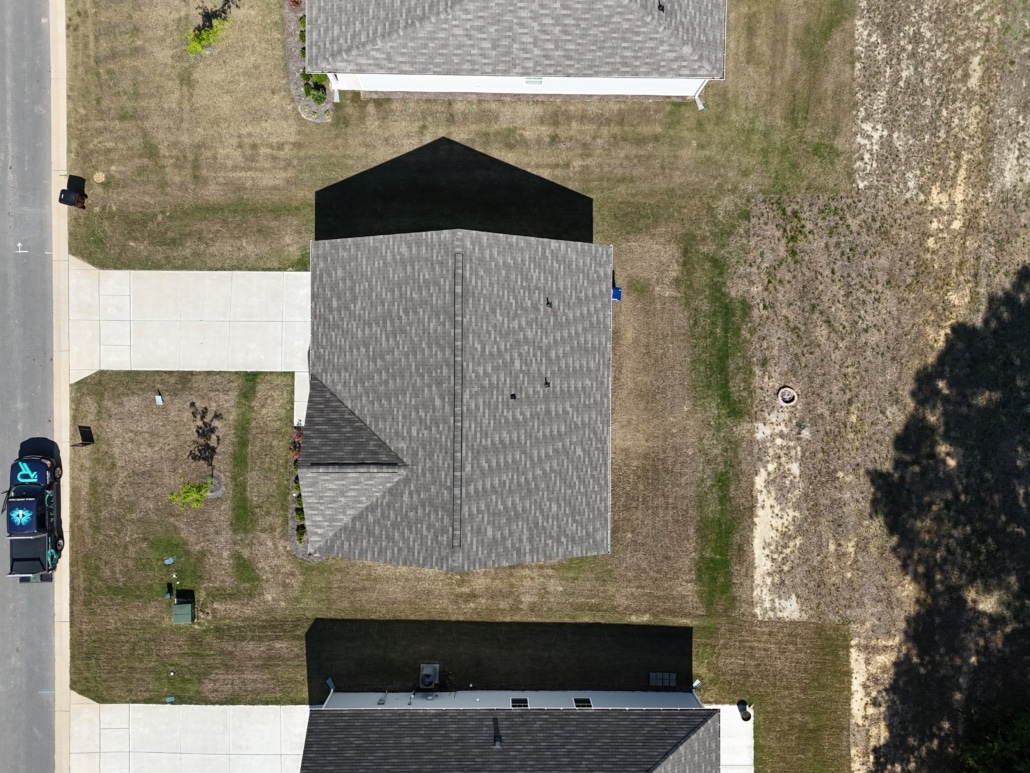
A drone view shows the shingle roof, its main ridge, and several penetrations. Those details help explain where a roof inspection looks beyond the shingles.
The roof is an assembly with several jobs
When homeowners picture a roof, they often picture shingles. The complete assembly includes the covering, underlayment, flashing, penetrations, supporting deck, and the details that direct water off the building. Its performance depends on how those parts work together.
A field of shingles can look reasonably intact while a deteriorated pipe boot or poorly arranged roof-to-wall connection admits water. The Department of Energy’s building-science guidance identifies roof intersections and penetrations as vulnerable locations and connects water intrusion with insulation damage and structural rot.
That is why I care about details. The condition of a small transition can matter more than the general impression from the driveway. A good-looking roof surface is useful information. It is not a complete evaluation.
A small opening can start a concealed water path
Imagine a hypothetical failure at a pipe penetration. Rain gets past the weather protection and wets the deck. Depending on the assembly, water may follow a framing member, pass into insulation, or continue into a wall before it becomes visible inside a finished room.
The ceiling stain identifies where moisture became visible. It does not reliably identify the entry point or the full area affected. A leak can also depend on wind direction or rainfall intensity, making a quiet interval between storms easy to mistake for a resolved problem.
From an inspection standpoint, an old stain needs context. It may reflect a repaired leak, an ongoing intermittent leak, condensation, plumbing, or another source. A dry reading on one inspection day cannot establish that the roof will remain watertight in different weather. The task is to identify the source and evaluate the affected area, rather than treat the stain as the entire defect.
Wet insulation expands the problem below the roof
Once water reaches insulation, repairing the outside opening is only part of the work. The material below may remain wet after rainfall stops. Depending on its type and condition, wet or compressed insulation can lose effectiveness and require replacement.
EPA’s water-damage guidance calls for discarding and replacing water-damaged cellulose and fiberglass insulation in its clean-water response table. Different assemblies and contamination conditions require appropriate professional judgment, but leaving damaged insulation in place because the roof has been patched is not a complete response.
The practical consequence is a wider repair area. Someone now has to determine what is wet, what can be dried, what must be removed, and whether adjacent materials were affected. Insulation can conceal the surface that needs evaluation. A tidy-looking attic does not establish that the layers underneath are dry.
Persistent moisture creates conditions for microbial growth
Moisture that remains in paper-faced materials, wood surfaces, or concealed cavities can support mold growth. A musty odor may be a clue, but neither the absence of odor nor the appearance of a single stain establishes the extent of the problem.
EPA recommends drying water-damaged materials within 24 to 48 hours to help prevent mold growth. That is a response guideline, not a guarantee or a countdown that makes the first two days harmless.
Where growth is present, stopping the leak and addressing the affected material are separate tasks. Painting over a mark does not resolve the moisture source. Concealed conditions may require evaluation by an experienced remediation professional before finishes are restored.
Repeated wetting can compromise the wood that supports the roof
The next concern is the supporting material itself. Roof decking and framing need to remain sound. When moisture conditions support decay, deterioration can progress beyond a surface mark into loss of material strength.
The USDA Forest Products Laboratory’s Wood Handbook explains that decay reduces wood strength and can cause meaningful losses before damage becomes visually dramatic. Drying the wood can stop conditions favorable to further decay; it does not restore strength already lost.
In a roof assembly, compromised decking may no longer provide dependable support for the covering and its attachment. Damage extending into rafters, trusses, or their connections raises a different level of concern. The repair may require structural evaluation and a designed repair, rather than simply replacing the visible roofing.
A stain alone is not proof of structural failure. Visible deterioration, deformation, or a questionable support condition warrants a complete evaluation. Waiting for an obvious sag is a poor way to decide whether the roof needs attention.
The visible interior damage can arrive late
By the time water shows through a ceiling, several concealed materials may already have been exposed. Continued wetting can damage drywall, joints, paint, trim, cabinetry, and flooring along its path. Water that reaches a finished room also threatens furniture, electronics, and stored belongings.
Water-damaged ceiling material can soften or sag and may fall. A bulging or sagging wet ceiling deserves prompt professional attention, with people kept clear of the affected area. It is not a useful place to stand while deciding whether the stain looks larger.
Restoration depends on the material’s condition, the water source, and the ability to dry the assembly. The Gypsum Association addresses water exposure as an assessment issue, not a universal instruction to repaint. Restoring the visible surface before understanding the cavity can conceal unfinished work.
Water can turn a roofing defect into an electrical hazard
A leak can reach a light fixture, junction box, wiring connection, or electrical equipment in an attic or wall. The concern then includes shock and fire hazards, not just damaged finishes.
The Electrical Safety Foundation’s guidance calls for qualified evaluation of water-damaged electrical equipment and warns against restoring power without that assessment. Equipment that looks dry is not automatically safe.
If water is entering electrical equipment, keep away from the affected equipment and wet area and arrange prompt evaluation by a licensed electrician. Do not touch a wet fixture or operate an affected device to find out whether it still works. Any necessary power isolation must be performed safely. This is one part of the cascade that cannot wait for a convenient roofing appointment.
Roof drainage can carry the damage down the exterior
There is another route through the house’s defenses. Water that cannot leave the roof and gutters as intended can overflow or reach fascia, soffits, siding, and wall connections. Discharge concentrated beside the house can also contribute to crawl-space or basement moisture where the site and construction allow it.
GAF’s maintenance guidance includes keeping gutters clear and evaluating damaged flashing. These details help explain why roof care extends beyond the shingles.
This is a possible drainage-related path, not a claim that every clogged gutter will damage a foundation. The useful question is where the water goes when the intended route fails. If that answer is into or alongside vulnerable parts of the building, the maintenance item has consequences beyond the roof edge.
Delay turns a roofing decision into a coordinated restoration project
A localized, repairable defect may initially need one trade and limited work. If water continues entering, the scope can expand to roofing, drying, insulation removal, framing repair, electrical evaluation, interior finishes, and damaged contents.
Those tasks also have an order. Interior reconstruction should not close over an unresolved leak or damp cavity. Structural repairs may need to precede replacement materials. Electrical equipment may need to remain out of service until evaluated. Depending on the damage, parts of the house may be unusable while the work proceeds.
The cost of delay therefore includes more than the additional material. It can include repeated mobilization, access openings, drying time, scheduling several contractors, moving belongings, and disruption to daily life. I do not need to invent a dramatic dollar figure to make that point. The growing scope is the expense.
Proactive roof care means acting on useful evidence
A practical routine starts with keeping roof records, knowing the material and approximate installation date, and arranging periodic professional evaluations appropriate to its condition. Seasonal observations and checks after significant storms can reveal changes that deserve attention.
Homeowners can observe from the ground for displaced roofing, debris accumulation, or changes at the edges. Accessible interior areas may reveal new staining. Roof access, high gutters, and repairs belong with people equipped to perform that work safely. Attic evaluation also requires safe access and dependable footing; ceiling finishes are not walking surfaces.
The maintenance plan should address drainage, debris, deteriorated penetrations, flashing, and other defects identified for that particular roof. Manufacturer instructions matter. A coating, pressure washing, or another layer of sealant is not a universal cure for an aging assembly.
Moisture can also come from inside the house. Building America guidance distinguishes roof and attic assemblies and explains condensation control. Air leakage, insulation, humidity, and ventilation need to fit the actual design. Adding vents indiscriminately, especially to an intentionally unvented assembly, can create another problem. Ventilation also cannot repair an opening that admits rain.
Replacement belongs in the plan before repairs lose their purpose
A limited defect in an otherwise serviceable roof may be repairable. Widespread deterioration, recurring failures, damaged supporting materials, or an inability to make dependable repairs can change that judgment. GAF’s roof-damage guidance makes the distinction between localized damage and broader conditions that may warrant replacement.
Age helps establish context, but a birthday alone does not determine serviceability. Neither does the number associated with a shingle warranty. The relevant decision is whether the installed assembly can continue doing its job reliably and what work is needed to support that conclusion.
Replacing the covering also does not automatically correct everything below it. A meaningful scope addresses deteriorated decking, failed transitions, and other documented conditions, while the interior water damage is evaluated separately. A new exterior surface should not become a lid over the old problem.
Protecting the roof protects the investment below it
A homeowner can postpone a cosmetic upgrade and still have a functioning house. Delaying a necessary roof repair makes a different wager: that the next rain will stay out, or that any water getting in will remain somebody else’s problem until later.
That is why the roof earns first place on my maintenance list. Its value is measured partly by all the other materials it keeps out of the repair budget. Keeping that protection intact is a quieter accomplishment than a remodeled kitchen, but it does more to preserve the house around it.
Common questions about roof maintenance
Does every roof leak mean the roof needs replacement?
No. A localized defect may be repairable when the surrounding assembly is serviceable. The cause, extent, condition, and ability to make a durable repair determine the appropriate scope.
Does a dry ceiling stain prove a leak is repaired?
No. It shows that the observed surface is dry at that time. Repair documentation, evaluation of the source, and the relevant weather conditions help establish whether the problem has been corrected.
Will a new roof resolve existing damage inside the house?
Not by itself. Wet materials, decay, electrical exposure, and interior damage require their own evaluation and corrective work.
How often should a homeowner check the roof?
Seasonal observations and checks after significant storms are useful starting points. Professional evaluation frequency should reflect the roof’s age, material, condition, surroundings, and manufacturer guidance.


Leave a Reply
Want to join the discussion?Feel free to contribute!